Friday, 15 January 2016

The Phone Booth

Mise-En-Scene

The mise-en-scene of the 'Phone Booth' helps to create a lot of mystery and some tension throughout the opening. It does this by not giving too much away about the plot and by only giving you information about the location and about phones, and one phone booth in particular, because it specifically mentions one phone booth this makes the audience question why it is talking about this one phone booth and what is so special about it, this then creates an enigma around the phone booth, this enigma in turn creates a little bit of tension as it makes the viewer feel unsure about how they
feel about the phone booth. As well as this the opening shows us that the film is set in New york and shows the constant flow of different people, it then shows us the protagonist of the plot and he is dressed very well and on his phone, this tells the viewer that he is most likely a businessman with a lot of money as a phone in that time period was a luxury. as well as all this both his facial and body expressions were that of someone very confident showing us that he is most likely very successful,  because confidence typically comes from success. In summary the mise-en-scene leaves the viewers with a lot of un answered questions which in turn creates a slight bit of tension. 
Camera

The camera work throughout the 'Phone Booth' plays a key part in revealing who and what the plots protagonist looks like as well as giving us information as to where the story is set and as to what its about. There are a lot of medium long shots and long shots  throughout the opening to show the audience all the people walking on there phones  and not paying attention to the world around them, this is portrayed by the many shots of street performers doing amazing things followed by people walking past them on there phones showing that the mobile phone is consuming the people of
New York, this is really emphasized when the collages of close ups of people on there phones covers the screen, reinforcing the idea of mobile phones consuming the people of New York. As well as this the audience are shown the story's protagonist from a medium long shot so that they can see his clothes and expressions, this allows them to see his social class and a little bit of his mood/personality based off of his expressions. 
Editing


The editing throughout the phone booth is very slow and this allows the viewer to spend time understanding the message that the opening is trying to get across of people spending too much time on there mobile phones and not enough in the real world. As well as it allowing the audience to understand this it gives them enough time think about the things they dont know like why it focuses so much
on one phone booth, enigma then causes tension for the viewer as they feel like they should be able to understand it like they understood the message of mobile phones and this lack of understanding creates tension as they really aren't sure what to expect.
Sound

The Phone Booth starts out with diegetic sound of some street performers signing about telephones, this sets the tone for the story being about phones and encourages the viewer to pay attention to the phones in the scene. As well as this after the singing stops a non-diegetic voice over comes in and talks about phone statistics and how many phone users there are in the world this again reinforces the idea of the film being about the over use of mobile phones, as well as this the voice over talks about the phone booth directly and this again creates an enigma as to what importance the phone booth has on the story. 

Jordan's Mad Max: Fury Road Textual Analysis

Mise en Scene 
In the opening scene for Mad Max we see nearer to the end of it that Mise en Scene is used when we are shown his dead family and the make up here shows a that the film is a thriller because the make up makes his family look like that have been slaughtered andthey are clearly not in a good place leaving the audience to feel discomfort. In the first minute of the opening we are shown a single character, Max, alone in a vast space of nothing but desert and sand, this really makes us as an audience feel empty too and as if we are alone with Max. Also the desert has a warm bright reflection coming off of it from the sun which could show that it is a very harsh environment to live in and gives off a sense off danger.


Edititng 
The editing throughout the whole of this opening is all very fast paced and leaves you on the edge of your seat a lot, especially  when Max is shown to be running through a corridor at a high speed when after every door he runs through it does a quick cut to an image of one of his family members, and is all very high paced with only straight cuts to keep building intensity. When Max is talking at the beginning we are shown why the world has collapsed like it has and why the world has turned into a savage one with no rules, the audience are shown flashes of horrible clips of slaughter, lack of fuel and wars all at a high paced blur.
 Sound
The non- diegetic sound of the drums in the background give the scene a constant building intensity and leaves us expecting something to happen with the crescendo of drums we can hear. Also to show that Max's daughter is dead when we hear her, her voice echoes in Max's head as if he is being haunted by the thought of the loss he faced years ago, making us feel sorry for Max

Camera 
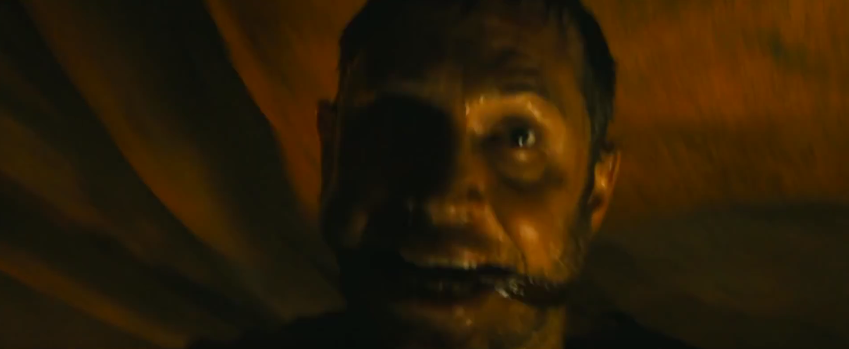
The camera techniques used give off the feeling of a Thriller by having a lot of zooms into Max's face so you get given whos perspective it is, and you get to see that Max is in a lower place then everyone and that he is in a place of danger when his daughter is looking down at him and we get a birds eye view of Max in a hole which could show he's in danger.


Tinker Tailor Soldier Spy
   
Mise-En-Scene

The mise-en-scene throughout the opening of the 'Tinker Tailor Soldier Spy' is key in building and maintain tension. One of the best examples of  mise-en-scene helping to build and or maintain the tension in the opening is when the protagonist goes to meet a Hungarian informant regarding a mole. The two characters sit across from each other in a little back alley café, This setting helps to add to the tension In the scene as the location they are in does not seem safe and the viewer is unsure about the intentions of the other characters, as well as this the Tension is built by the facial expressions of the two main characters as well as by the facial expressions and bodily expressions of the people surrounding/and inside of the café, an example of one of the café characters being on edge is the waiter who gives the two main characters there drinks, he is sweating a lot and has shaky hands when placing the coffee down showing the viewer that he is nervous and is on edge, as well as this there is a close up of a puddle of sweat on the table this little puddle of sweat has connotations of a puddle of blood foreshadowing to the viewer the potential violence to come. this then in turn puts the audience on edge as they don't know what to expect. This level of suspense, tension, and mystery is maintained throughout the opening by using mise-en-scene to portray a dangerous locational situation that is surrounded with uncertain characters with unknown intentions, this vast level of uncertainty leaves the viewer feeling uneasy and tense, which is exactly what a thriller is supposed to do.

Camera  
The camerawork is very important in helping to create tension and helping to build lots of mystery's for the viewer. It does this by mostly using medium to long shots this means that the viewer always has a lot of  locational/contextual visual information being given to them, this in turn confuses the viewer and leaves them with too much information to process and not enough time this builds up the tension the opening sequence. As well as this the camera does a lot of close ups on facial expressions to give the viewer an idea of certain characters physical and mental states, in the café scene there is a close up on the both the waiters face revealing to the audience how much he is sweating and there is a close up of a bead of sweat that has hit the table, this shows the viewer that he is nervous and creates an enigma around as to why he is nervous. The camera work cleverly mixes between close ups to show character expressions and long shots to show dangerous setting this mixture of camera angles builds lot of tension and helps to reinforce mystery. 

Editing  

The editing also helps to build and or create tension throughout the opening as it starts out slow and not cutting very often and as the scene builds up towards its climax the editing pace gets considerably faster, this faster cutting then creates tension amongst the viewers and leaves them awaiting the climax of the scene, at this point the editing slows down considerably and then the climax of the scene is reached making the scene much more dramatic and powerful. The scene that uses this technique most
promomantly is the one were the main character gets shot when leaving the café, the cuts building up to the shot are very fast and then abruptly stop when he shots, this creates the effect of the gun shot stopping not just the character, but stopping the scene entirely, which is much more powerful and helps to maintain the tension and suspense within the scene. As well as this fast cuts are used to create a mystery/enigma as they cut so fast the viewer doesn't have enough time to get used to one scene, and so is left not just "on the edge of their seat" but are left guessing and unsure as to what to expect next this mystery also adds to the tension. Fast and slow cuts are used throughout the opening and are used to different extents depending on what part of the scene you are watching.

Sound
The sound throughout the opening is used to build tension. One example of this is when the main character is walking to the café, there is a constant but slight crescedoing  non- Diegetic background which builds with the drama/tension in the scene this helps to build the tension within the scene and helps to build up the suspense. Another way in which the sound builds up the tension in a scene is when the two characters are staring at each other in silence the
non-diegetic music stops and everything goes quite except the diegtic sounds of a rattling coffee mug, this near silence is then abruptly interrupted by the sound of a pigeon landing, this sound is very fast and loud and so it essentially cuts through the silence of the scene abruptly and makes the viewer jump as they were left in suspense waiting for something big to happen but it was just the sound of the pigeon, This I very clever as it builds the tension extremely high right before the climax of the scene making it again more powerful and dramatic. 


Jordan's Silence of the Lambs Textual Analysis

Silence of the lambs has a lot of Thriller film convection that are shown in many ways, for example, Editing in the film, Sound, Mise en Scene and Camera.

Mise en Scene
 Mise en Scene is used to portray the feel of a thriller film, because we can see in the background of the whole beginning scene where she is running through the woods there is a thick fog in the forest which gives off an enigma of the unknown because we cant see whats in the fog leaving us uncomfortable. Also in the scene where she is outside running, she is running in a dark forest with low key lighting which could portray danger to the audience. Finally the protagonist's outfit is FBI workout gear*, and i see this as there being the powerful character with high status and a good job so this is almost showing that she has a good job and is powerful, almost setting up for things to go wrong for her later on, this makes the audience feel tense because they're almost expecting something to go wrong. 
 
Costume*

Editing
The editing in the opening for Silence of The Lambs, is slow paced and a lot of the shots last long and aren't fast paced cuts, however they do slightly build up as it comes to the end of the scene. The slow paced cuts do create a long dragging effect and we could be waiting for something to happen, and it lets us relate to the protagonist because she is exercising and worn out so the long cuts could help us understand how hard it is for her. Throughout the opening the names of cast and crew appear on screen*, and the use of credits while she is running could show that what she is doing is a montage and that she has been running for a lot longer then it actually shows. 
 
Credits over protagonists*

Sound 
The sound in the opening portrays convection's of a thriller film because in the background you can hear the non diegetic sound of a violin playing which slowly builds up toward the end of the scene and creating crescendo suspense as the violin gets louder and faster, leading us to think something bad is about to happen. then there is the diegetic sound of crows and other wildlife in the forest that the opening is in, the use of the sound of crows could portray feelings of solitude or even death, as audiences would think of. Also we can hear the woman in this opening breathing heavily as she is out of breath from exercising, this is probably used to show vulnerability and weakness. 

Camera  
The Camera techniques used within the opening are used well to show that this film is a thriller and to create suspense. For example there is a shot of her feet while shes running and it is shot in a way as if she is running away from something as we can only see her feet moving at a fast pace, also the close up of her feet limits our view of whats around her and that she is the focus of that shot, creating the feel of solitude. There is a shot at the end of the opening where we see an establishing shot* of where she has just gone and this shot could show that shes safe now because it slowly pans down as apposed to the faster camera pans earlier on to show that every things calmed down now. 
Establishing shot of Bureau*


Preliminary Film


Thursday, 14 January 2016

Samuel
Inception

The mise-en-scene in the 'Inception' opening helps to build lots of tension and helps to create many enigmas. One way in which it builds tension is when the protagonist is shown washed washed up on a beach having a mirage about what appears to be his kids. This along with both his body and facial expressions shows the viewer that he is not very well and must have been through as awful lot to get to were he is now, the condition he is shown in tells the viewer that he is very weak and frail, as well as this building tension it also builds up and enigma as the audience doesn't know how he ended up there? Why he ended up there? And the audience doesn't know where he is? all of this mystery helps to add to the tension, as the viewer doesn't know what to expect. As well as this once the protagonist gets brought into the large house we see next to the beach, he is greeted with an elderly Asian man who seems to have a lot of interest in a small spinning top, this is normally something someone wouldn't pay a second thought too, this suggests that it is important to the plot and therefore intrigues the viewers, however it doesn't tell them why it is significant once again creating both an enigma and tension.


The camerawork helps to both build tension and an enigma. It does this by having lots of extreme close ups and close up shots throughout the opening sequence. These close ups create a lot of mystery as the viewer doesn't get given a lot of locational context as well as this the close ups force the viewers to pay close attention to the facial expressions of the characters and all of the expressions given were very serious and tense this leaves the viewer questioning why? They are so tense and therefore creates a mystery and the unknown creates even more tension, leaving the viewer once again on "the edge of their seats". As well as all of this the opening shots of waves crashing on a beach front, create tension and suspense, it then cuts to a close up of the protagonists face, showing the viewer both the physical condition he is in based off of the cuts and bruises on him and his mental condition based off of his facial expressions, as well as his facial expressions being a sing of his mental condition the cut to his mirage of his presumed two kids running on the beach front shows the viewer that he is not in a normal state of mind. Also there is a close up of the spinning top after it has been spun reinforcing the idea of the spinning top being important and create suspense and tension as the viewer is expecting something to happen, as they have been lead to believe that it is important. All of this helps to create tension suspense and mystery, which are all key conventions to a thriller. 


The editing helps to keep the scenes tense and helps to not give too much away. It builds this tension by fast cuts all the time, you're never left watching one scene for too long, it is always cutting and this creates tension as the viewer is being shown lots of information very quickly, but isn't given enough time to properly process or understand it all, leaving them on the edge of their seat and not knowing what to expect next. This lack of expectation then creates mystery as the viewer doesn't fully understand whats happening and is left wanting the answers to a lot of questions building up both the tension and the number of questions that the audiences has.
 The sound helps to maintain the tension in each scene and to also build up tension. The first few shots of waves crashing on the beach front are accompanied by very loud and dramatic sounds of crashing waves this sets a dramatic and tense atmosphere for the rest of the opening to follow. The very next scene juxtaposes this dramatic crashing sound, as the sound of the waves are very delicate and you can hear the sound of kids laughing and playing faintly in the background this then lowers the tension and calms the viewer down until the kids disappear, the diegetic sound of the waves then gets slightly louder and faster and a slight bit of dramatic music begins to quietly and slowly crescendo this juxtaposes with the previous calm atmosphere and the contrast between these two emphasizes the tension in the scene and puts the viewer "on the edge of their seat again". The use of two juxtaposing sounds is very clever and is this technique is used throughout the opening in order to emphasize the tension within certain scenes. 


Samuel
The Usual Suspects

The: mise en scene, camerawork, editing, and sound all help ensure that the ‘Usual Suspects’ opening is filled with thriller conventions.The mise en scene helps to create a typical thriller feel, the antagonist is wearing a long black coat and his body expressions are that of someone very calm, despite him being in a very tense situation, this is shown when the injured character attempts to blow the boat up he calmly stands above the trail of fire and urinates on it showing the audience how calm he is in a life or death situation proving to them that he is very calm and powerful. The character in the opening of the film that we see sitting down is portrayed to be very weak, vulnerable, and desperate as his facial and body expressions are that of a very weak and injured man, he is shown to be desperate because in the first few seconds that we see him, he attempts to set a trail of petrol a light to blow himself, the antagonist, and the boat up showing the audience that he is not strong enough to fight the antagonist, and so his last line of defence is to blow himself and the boat up. As well as this he is sitting down and doesn’t appear to be attempting to try to move from the danger coming towards him showing the viewer that he is not strong enough to resist/ fight the danger coming his way. All of this builds up lots of tension and this tension really keeps the viewers on the edge of their seats, which is a typical convention of a thriller film.


As well as this the Camerawork never reveals the face of the antagonist, it only shows the bottom half of him, this helps to create an enigma around who the antagonist is? And what he looks like? This enigma is a typical convention of a thriller film and as well as creating mystery it builds tension as the viewer is left questioning and tense because of what they do not know. The camerawork also builds tensions as it tracks the flames as they move towards the leaking barrels, the viewer is expecting a huge explosion until the flames are abruptly stopped by the films antagonist. Once again leaving the viewer questioning who the antagonist? Is and what he looks like? But the camera still never pans high enough to see his face continuing the enigma.


The editing helps to create a lot of tension which again is trademark of a thriller film, it does this by having lots of fast cuts and by cutting away at key points leaving the rest to the viewer’s imagination. One example of this cutting during a tense scene is when the antagonist is just about to pull the trigger to kill the injured man, the editing cuts away to a shot of the boat and all the viewer is left with is the sound of two gun shots, the rest they have to fill in with their imaginations which tend to always be worse than the real thing, this once again helps to create both tension and mystery which are both key conventions of a thriller.

The sound throughout the opening helps to build tension as the whole way through it there is slow but tense sounding music that crescendo’s when the boat blows up which helps to reinforce tension throughout the opening. As well as this the sounds of things like the petrol coming out of the barrel are emphasised to build tension, also the gun shots are made louder so that they cut through the momentary silence and have more impact upon the viewer once again building  up huge amounts of tension.